




I come from southwestern Germany, on the border with France. During my early days at university, the Director of the Diplomatic Academy visited to provide counselling on the diplomatic profession. I was impressed by the fascinating opportunities that a career in diplomacy could bring. But we were also cautioned about the challenges and difficulties of the profession. I chose to apply. After two years of training, I went out on my first posting.
Nepal: My First Time in Asia
Nepal is my first posting in Asia after almost three decades in the profession. I spent most of my career in Europe, Africa, and Latin America—basically everywhere except Asia. This has been a completely new experience because I had never travelled to Asia before. I have found it very interesting since I arrived here a year ago.
The past year in Nepal has been exciting in all kinds of ways, with colours, expectations, and disappointments. But the six months from September to March, including the elections, were a tremendous story. You would not have expected things to turn out so well in the end.
It started with something close to a disaster, with two days of violence. Then, very quickly, through the military handover to the interim government, they managed to keep their promise of holding elections within six months.
The new government is taking up what had been asked for in September: change and transparency. When you look at it from the outside, it is unique to have that kind of development in such a short period, with such an encouraging outcome.
During that week, I was in Berlin at the Ambassador’s Conference, so I knew about it mainly from my colleagues here. We never knew how it would develop or how long it would last, and we felt it was really a Nepalese issue.
If you lived down the road from a place where a building was burning, you would naturally be careful and start wondering what might come next. But no one felt that the situation would turn against foreigners.
You may also read: The Way I See Nepal: People, Place and Culture
Cultural Heritages
At first, I would have thought that Kathmandu was at least 3,000 metres above sea level because you always imagine Kathmandu to be almost in the Himalayas. It was interesting to realise that Harare, the capital of Zimbabwe, where I served before, is at around 1,400 metres—actually a little higher than Kathmandu.
So, you go to the Himalayas, to the famous country of high mountains, and you start in a capital that is not particularly high in altitude. Once you arrive, however, you quickly notice how rich in culture and tradition the city is. Kathmandu has developed a long-term energy through its temples, heritage sites, history, practices, and rituals, all of which are very much alive.
Bhaktapur is a must for us because the Bhaktapur Durbar Square was renovated in collaboration with the Germans. This was a cooperative project that lasted almost 15 years, from 1974 to 1988/89, and was huge at the time.
I was especially interested in Bhaktapur because I had been invited to some of the festivals and went around the town during Tihar last year. I recently went to Dhulikhel, where we performed a puja that morning.
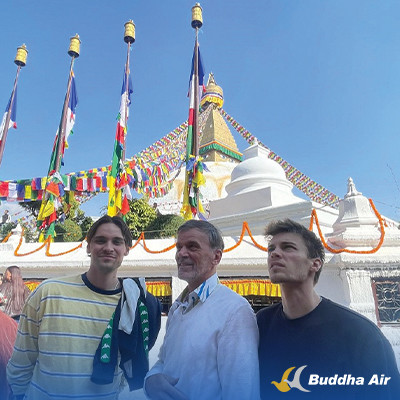
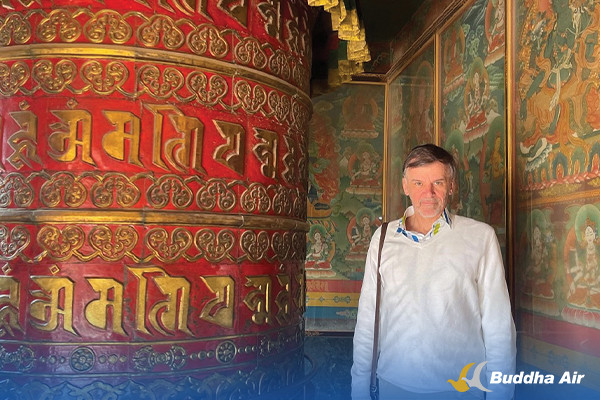
Given my limited experience, Boudhanath would be a very special place for me. It emits very good energy. It is a place of its own, with the monasteries around it. It is not a square; it is more like an oasis in the city.
You may also like: Jwajalapa Bhaktapur- Experience the Timeless Charm in Nepal
Jazz in Kathmandu
I like that Kathmandu has the Jazzmandu music festival. It is more of a modern cultural experience, but it is very much sought after in Kathmandu. There are different places where bands and musicians perform. It is held over one weekend and attracts many people, including visitors from outside Kathmandu.
A Living Culture
You go around the city and find so many temples. Many people go for early morning worship, and it is part of everyday life. There is also a sheer number of religious holidays and festivals.
With generational changes, traditions can be difficult to maintain. But in Nepal, they are very much alive.
I was born into a Catholic family, and when I was small, whenever we went to church, it was usually pretty full. If you go nowadays on a normal day or occasion, you will find fewer people. Here, when you go to certain occasions and festivals, the streets are still very busy and crowded. People keep traditions that may slowly change in future generations, but they remain visible, as does heritage.
Nepal is very famous for its hospitality, and it comes across very naturally. Sometimes, when you go to other places as a tourist, you feel that you are part of a business. Here, you may be a tourist, but you feel more like you are experiencing human interaction, even in tourism. This is a trademark of Nepal. I have been fortunate to have been posted in this country.
Nepal-Germany Tourism
ITB Berlin is a very important fair because it brings together such a wide range of people and countries. It is one of the major platforms for Nepal to present itself. We do not have specific government programmes for tourism because it is largely a private activity. People choose their agency or make their own itinerary for visiting Nepal.
Some people who study tourism learn German at the Goethe-Zentrum through language courses, allowing them to interact, at least in Part, in German with tourists who come to Nepal.
When I said in Germany that I was going to Nepal, many people said, “Oh, I was there some time ago. I visited the mountains and met people.”
We promote Germany in our own way, just as each country does. We do not push Germans to go to particular places. People are very individual and have their own interests. They may want to go to beaches or mountains, prefer hiking at lower altitudes, or want cultural experiences. There are many choices. I am sure Nepal has much to offer them.
Outside Asia, Germany is probably the second-largest source of visitors to Nepal after the UK. We could be back to around 30,000 tourists from Germany per year. Of course, there is no comparison with India. German visitors account for only around 3 to 4 per cent of overall tourism, but the numbers are steady.
There is a certain level of interest, and people come to experience the hospitality, which seems to be so natural here. Sometimes people have to make an effort to be hospitable or friendly, but for most Nepalese, it comes naturally.
This is also why so many Nepalese are successful when they work abroad in hospitality. Even in a different setting, they are usually very friendly, and it makes a difference.
Travelling in Nepal
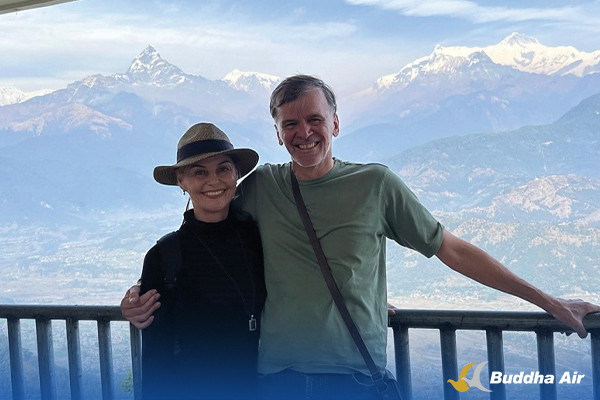
Travelling is my hobby, but for now, I have only travelled to a few places, including Kathmandu Valley and the surroundings of Pokhara, where I went both privately and for work. I have many other places in mind for the next post-monsoon season, and I hope I can make it.
Unfortunately, I have to start with a disadvantage because travelling by road is quite difficult. I went to Pokhara once by car and found it quite exhausting, at least until halfway there. When travelling by car, you have to consider whether you really want to drive or would prefer to fly and take the next connection.
I once travelled to Pokhara with Buddha Air, and it was a very good flight. The good thing was that there were so many flights that if one was a little early or late, you could take the next one and adjust your booking. That flexibility is great.
I am here with my wife, who has been here since the beginning. In December, our two sons came, and we travelled to Pokhara, spending some time there before returning to Kathmandu. We stayed at a place further up towards the mountains and were very fortunate with the views. We could not go hiking, but we had excellent mountain views. We spent some time at the lakeside and then went up to the Peace Pagoda, so it was quite good.
I have seen a bit of the Valley, but I would like to go to Chitwan, Lumbini, perhaps Bardiya, now that the tiger story is out, and, on the other side of the country, Ilam and Upper Mustang. So, I still have a lot to do over the next few months once the travelling season starts again. I had some plans, but they did not come through, so I had to postpone them and hopefully pick them up after the monsoon.
Taste of Nepal
Food! What can I say? Momo! Everybody loves momo. I love fried momo. It may not be the most original version, but I love the fried ones because they are very nice.
If you get a whole menu of traditional Newari food, that is also very nice. Now, there are places run by chefs who have been trained abroad and bring back their knowledge to apply here. They go around collecting local ingredients and then fuse them, updating traditional dishes into modern versions.
That is very interesting to see, as it also highlights the diversity of food crops across the country and what can be found here.
Also read: Delicious Nepal - Best Nepali Cuisines You Must Try
A Historic German Visit to Nepal
I found it interesting when we looked at the history of German visits to Nepal. In 1967, the then Federal President of Germany visited Nepal and stayed for a few days. He met the King, and when he arrived, he came on the first jet aircraft to land in Nepal.
It will be 60 years next year. It was the first jet plane to come to Nepal, carrying the German President during his visit. For me, this is another fascinating connection between Germany and Nepal, and one more part of the history I have been discovering during my time here.
In conversation with Manisha Saru


