




Kathmandu has developed into a densely populated city, home to hundreds of thousands of people. As a result, hundreds of restaurants are busy every day. Most restaurants serve both vegetarian and non-vegetarian dishes. There are also quite a few restaurants that specialize only in vegetarian food and sweets.
When people hear the term ‘Newari khajaghar,’ they often think of non-vegetarian restaurants. But Kathmandu also has a few small eateries that serve only vegetarian food. One such place is located at Bangemudha Chowk inside Asan.
The two sisters run their eatery from a small traditional rest house at the square. They prepare and sell a variety of dishes, including yomari, pakoda, batuk, bara, bread chop, potato chop, vegetable curry, and pickles. The vegetable curry is made with potatoes, chickpeas, and masyura (dried lentil nuggets), while the pickles include cucumber, radish, and carrot.
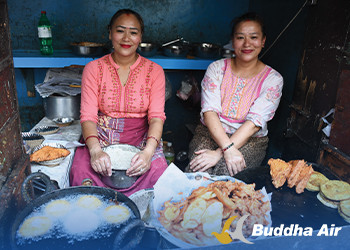
There is only enough space for two or three people to sit and eat. Most customers buy the freshly prepared snacks to take away. Some can also be seen eating while standing by the roadside.
The snack shop has no signboard. There is, however, a notice that says, “Yomari available here.”
Those who have tasted the food here keep coming back. Some even return after coming back from abroad because they remember and miss the taste.
The sisters who run the shop are Nilu Maharjan and Laxmi Dangol from Patan. They ran a similar snack shop in Patan for about three years. They moved to Bangemudha after seeing greater potential here, and it has now been about ten years since they relocated.
They have rented a room near the snack shop. Every day, they leave Patan and arrive here at 10 a.m. They chop onions, potatoes, and other vegetables, prepare the vegetables, and soak chickpeas and flour. They mix spices into the soaked batter and prepare it for cooking.
They start cooking at 2 p.m.
“We have focused on vegetarian snacks,” they say. “Most of our customers are Nepalis. Indian visitors and other tourists also come here.”
They say Indian customers particularly praise their pyaji (pakoda), licking their lips in appreciation. Foreign visitors praise the food as ‘cheap and best.’
The dishes cost between Rs. 25 and Rs. 60. A single batuk costs Rs. 25, while a plate of vegetable curry costs Rs. 60.
Both sisters are cheerful and friendly. They rarely speak without a smile. They treat their customers with respect, and the customers also address them affectionately in different ways. Young people call them ‘sisters.’ Teenagers call them ‘aunties,’ while older customers respectfully call them ‘daughters.’
Business is satisfactory.
“We are happy to serve cheap, tasty, and fresh snacks. We are also able to keep ourselves busy with work,” they say. “Our customers are happy too. So, we are satisfied.”
Their snack shop is open from 2 p.m. until 8 p.m.
Contact
Didi Bahini Khaja Ghar
Bangemudha, Kathmandu
Nilu Maharjan: 9818955014
Laxmi Dangol: 9861611647
You may also like: Delicious Nepal - Best Nepali Cuisines You Must Try
5 Most Popular Newari Dishes
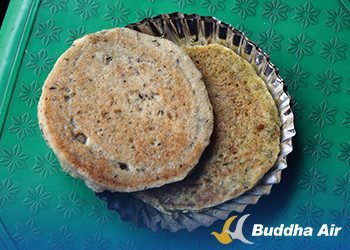
Bara
Bara is a protein-rich dish. To prepare it, maas (black lentils) and mung beans are soaked and ground into a batter. Salt and spices are added as needed. The batter is then cooked on a lightly oiled griddle, turning it over until both sides are done. It is served with pickle.
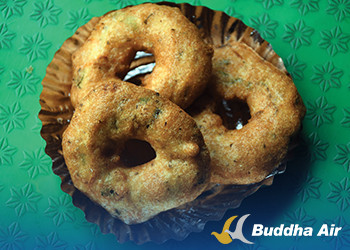
Bara (wa)
To make bara (wa), black lentil flour is soaked and prepared into a batter. Green coriander, onion, green chillies, and other ingredients are added. The mixture is then fried in oil. It has a round hole in the middle. Hot batuk is served with pickle.
Yomari
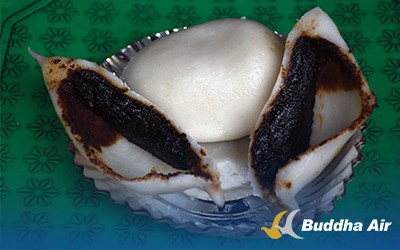
Yomari is a traditional dish that is especially popular during the winter months as it helps keep the body warm. Rice flour is kneaded into a dough, filled with khuwa (thickened milk) or chaku (molasses), and shaped into a traditional form. It is then steamed for about 15 minutes. The yomari is ready to eat.
Pakoda
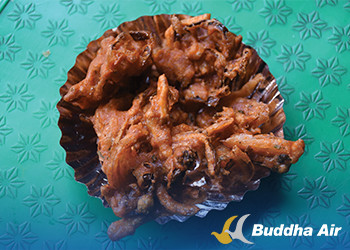
Pakoda is made by mixing chopped onions, potatoes, cabbage, and carrots with salt, chilli, and other seasonings. The mixture is coated in gram-flour batter and deep-fried in oil. The pakoda is then served with pickle.
Chop
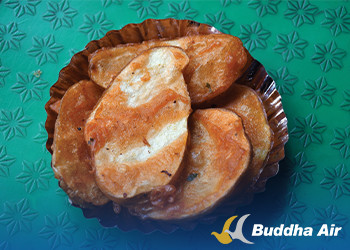
Two types of chop are made here, using potatoes and bread. First, pieces of potato are fried in oil and served with pickle. For bread chop, a spiced mixture prepared in a grinder is placed between slices of bread. The bread is dipped in gram-flour batter and deep-fried in hot oil to make a crispy bread chop.
Also See: Discover the Rich Taste of Karnali- A Foodies Guide
Vegetable Curry
Different vegetable curries are prepared here using potatoes, chickpeas, and soybean masyura (dried soybean nuggets). A seasoned dish made with potatoes and masyura is also available. Those who enjoy spicy food particularly like this preparation. Pickles are also available alongside the curries.


