




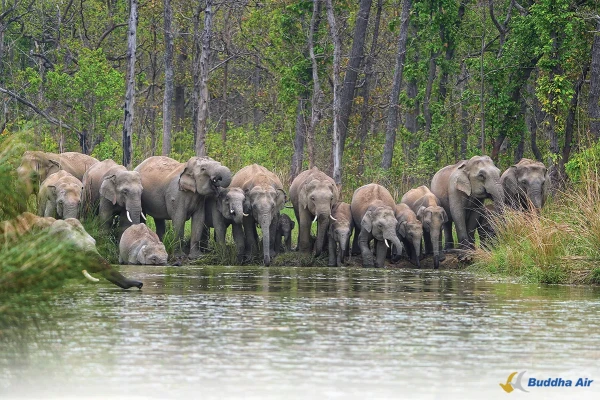
People often ask, “Why go on a jungle safari?” The moment you enter the forest, you feel a deeper affinity with nature. You get to see different kinds of trees, plants, birds, butterflies, and animals. Observing their habits, lifestyles, and natural surroundings brings joy. It fills the mind with fresh energy. The jungle itself is a vast storehouse of knowledge — a true path to happiness.
A journey into the forest is not easy. And the role of a nature guide is even more challenging. Still, one good thing is that we get the chance to meet new visitors every day. It creates a sense of global friendship.
Bardiya is my birthplace and my workplace. It is famous for Bengal tigers. According to 2022 data, Bardiya is home to 125 tigers, 38 rhinos, more than 120 wild elephants, and over 515 bird species. Bardiya has enough hotels, resorts, and homestays to accommodate visitors.
Alongside my work as a nature guide, I also do photography. I truly enjoy it. Capturing the movement of animals and birds feels especially thrilling. When I return home and look at those pictures — or show them to friends — it brings a special kind of joy. Sharing the stories behind those moments is equally delightful.
Forest journeys are always challenging. One must stay alert at every moment. There have been incidents where tigers and elephants have charged at us. As a nature guide, I must not only protect myself but also take responsibility for the safety of the visitors.
Compared to Chitwan, fewer tourists come to Bardiya. This is why aggressive marketing is necessary. It is the government’s responsibility to create an environment where local people benefit as much as possible from conservation and tourism.
I have taken many photographs in Bardiya. Here, I briefly discuss ten of them:
1. Snake (Twin Spotted Wolf)
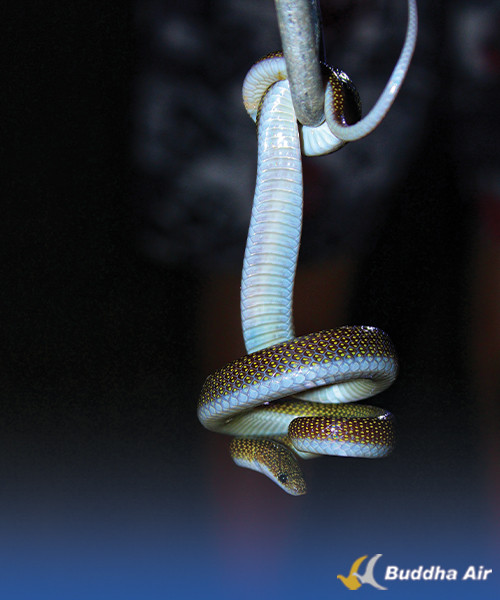 We also rescue snakes that enter village homes. This snake was rescued at night from a house in Thakurdwara, Bardiya. It is not a venomous species. It feeds on insects and frogs that come near lit-up areas. After rescuing it, we released it back into the nearby forest.
2. Wild Elephant
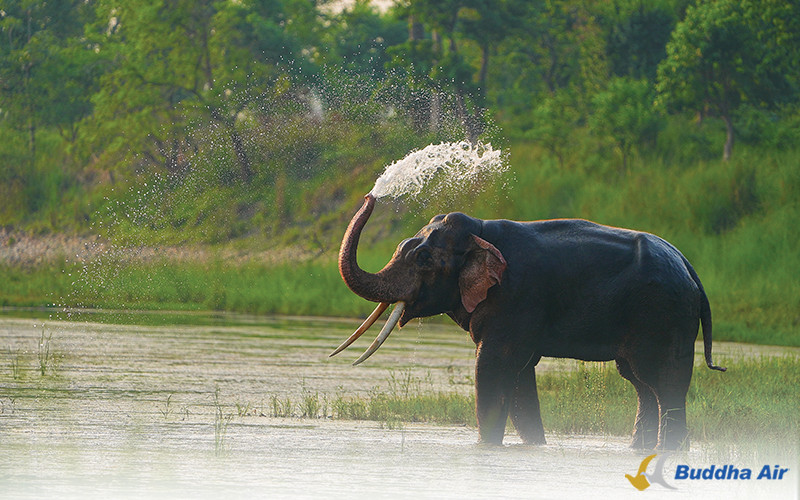
They usually live in groups. They don't stay in one place all the time — they move to new areas every day in search of food. Male elephants, however, often walk separately. They eat grass, tree bark, reeds, and similar plants. I once saw a herd of 45 elephants at once.
3. Himalayan Black Bear
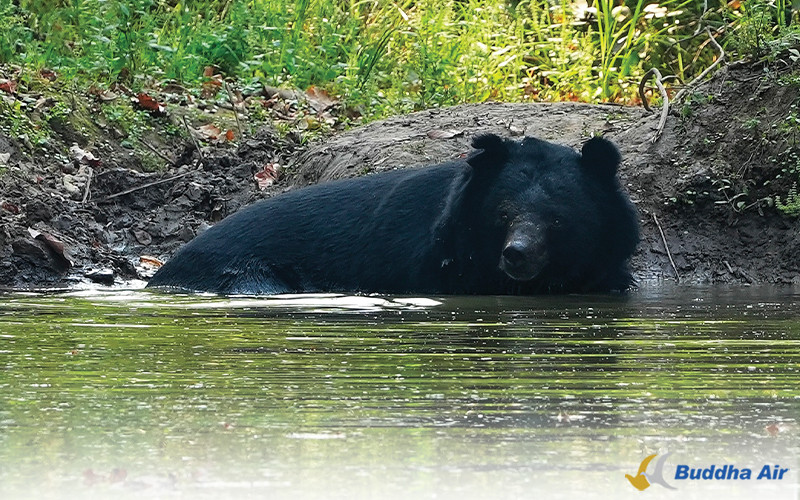
One summer day, we were waiting, hoping a tiger might show up. A bear appeared at the pond where tigers usually come to drink. It drank water and quietly walked away. The Himalayan black bear is generally found in the hill regions and is rarely seen in the Tarai. It eats seasonal fruits, roots, and similar forest foods.
4. Tiger
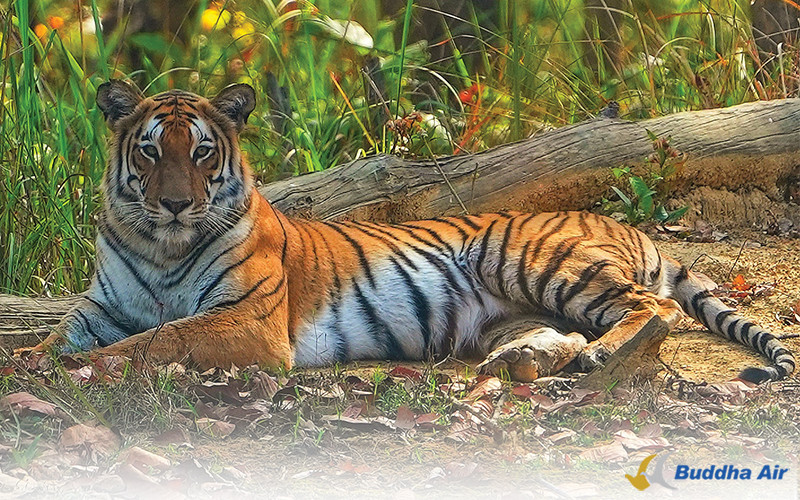
Tigers are shy by nature. They look strikingly beautiful and strong at first glance. Their movements are calm and composed. When a tiger has just eaten and is resting, it won’t attack even if another animal comes close. In this photo, a tiger is drinking water from a pond and resting during the hot summer months.
You may also like: BARDIA: Nepal's Tigerland and Cultural Corner
5. Leopard
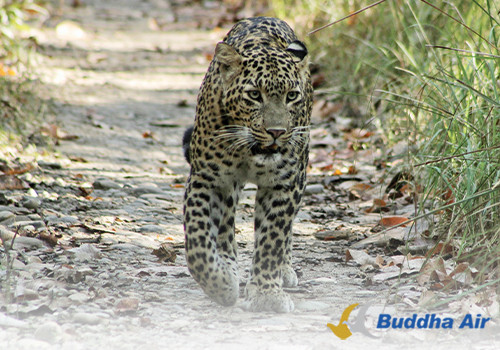
There is a particular spot in Bardiya where leopards are commonly seen. We call this leopard "Birkhe." It appears frequently and is not scared by the sound of vehicles. It even comes close. I took this photo from a jeep I was driving, from just about 10 meters away. Leopards are skilled climbers. They can carry prey that weighs twice their own body weight. There are 35 leopards in this area.
6. Peacock
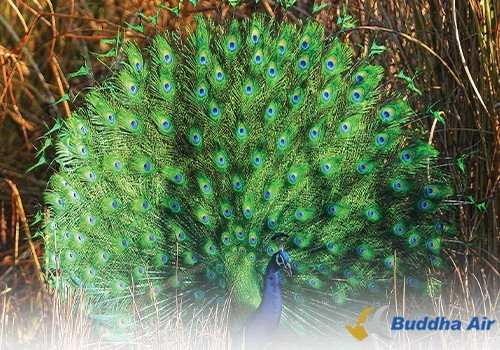
The peacock is considered a symbol of beauty. The male peacock is especially stunning. It spreads its feathers and dances to attract the female. The one who performs the most impressive dance attracts the females. You can usually see peacocks dancing inside the national park right before the monsoon begins. When I took this picture, five female peacocks were nearby. Peacocks can fly long distances, although they mostly walk on the ground. When they sense danger, they run swiftly.
7. Blackbuck
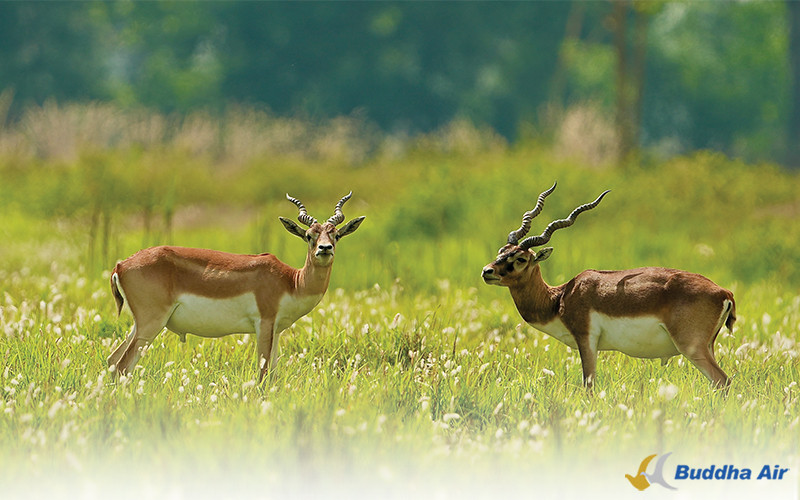
In Gulariya, Bardiya, there is a Blackbuck Conservation Area, and this photo was taken there. The horns of a blackbuck never fall off. The males are dark-colored, while the females are lighter. Blackbucks can jump extremely high. They eat grass and small plants. Their groups are led by a dominant male, who also marks the territory by spreading his urine around.
8. Rhinoceros
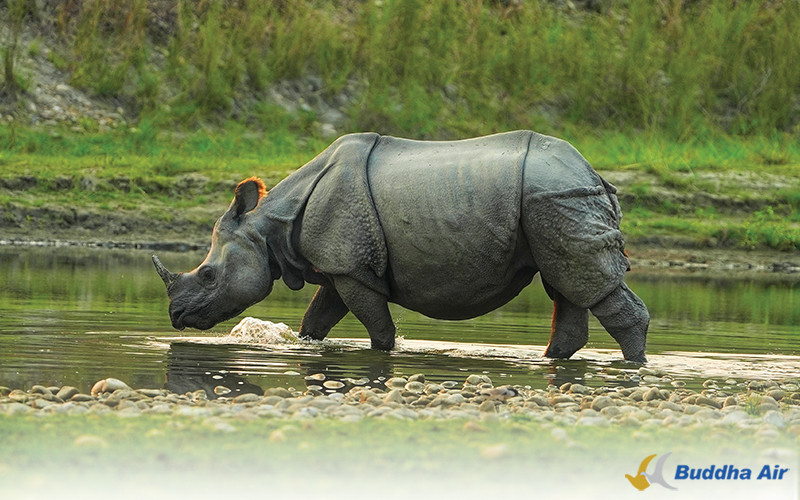
This is a male rhino photographed in the Shiwa Community Forest near Bardiya National Park. During summer, rhinos spend long hours in ponds, marshes, and wetlands to drink water and cool themselves. Sometimes they remain submerged for 5–6 hours continuously. They eat grass, tree leaves, bark, and aquatic plants.
9. Spot Bellied Eagle Owl
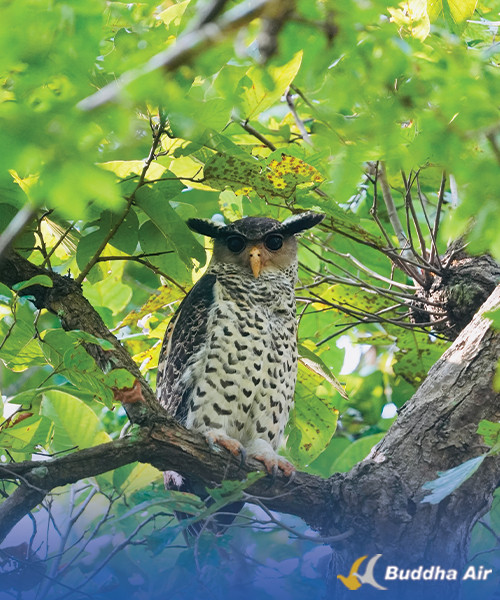
This type of owl is rarely seen in Bardiya. We took this picture during a jungle safari. They live in dark forest areas where sunlight barely enters. Owls are active only at night. Their main diet includes rats, lizards, insects, and snakes. Sometimes they also eat fish from nearby ponds.
10. Green Bee-eater
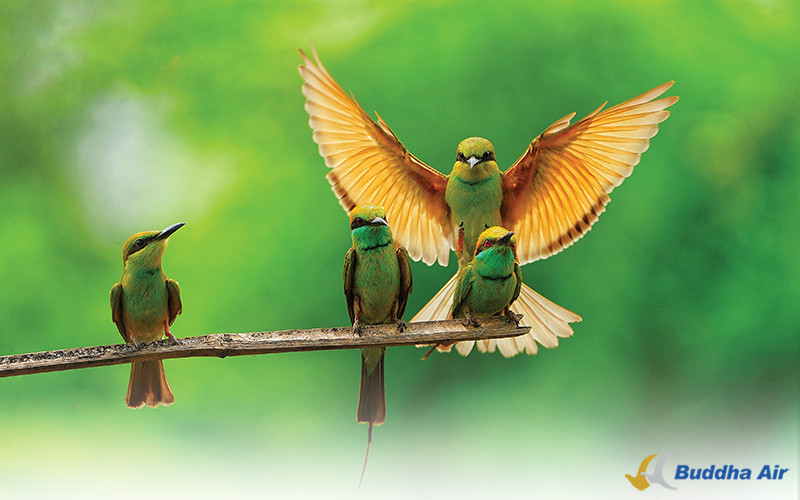
The Green Bee-eater is commonly seen in Bardiya. During the breeding season, they appear in large flocks. They live in grasslands and riverbanks, digging small burrows in the soil to make their nests. It is difficult to distinguish males from females at a glance — they look almost identical. Their main food includes bees, insects, butterflies, and dragonflies.
About the Photographer
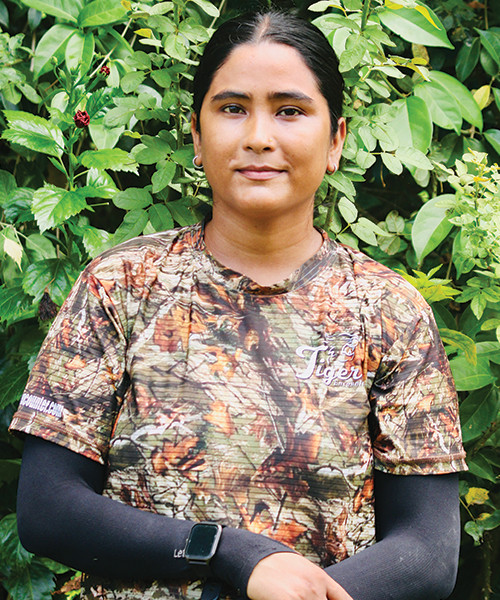 Manju Mahatara is a conservationist. She holds a senior nature guide certification and takes tourists around the national park. Photography is her passion. Her father, Aite Mahatara, was a mahout (elephant caretaker) at Bardiya National Park. Because of this, she was involved in biodiversity conservation from a young age. Her sister Sushila is also active as a nature guide.
After completing her Plus Two in hotel management in Nepalgunj, she worked as a cook at a hotel in her hometown, Thakurdwara — the headquarters of Bardiya National Park. In 2018, she completed nature guide training and began photography.
“I used to take photos on my mobile phone,” she says. “A foreign tourist gifted me an SLR camera, and that’s when I really started learning photography.”
Her archive now contains more than thirty thousand photographs. When there are tourists, she takes them into the jungle. On free days, she roams around the nearby rivers and community forests with her camera.
Wildlife photography is challenging. Yet, Manju has not been able to earn much from it. "I have sold a few photos here and there," she says, "but mostly, I simply enjoy looking at what I have captured."
Manju is now 29 years old. She wants to dedicate her life to wildlife conservation. “There are very few female nature guides and photographers in our area,” she says. “I want to inspire more women to join this field.”
Warm wishes to the exemplary youth, Manju Mahatara!
Contact: 9869452272


