




There is a particular kind of silence found in Nepal’s mountains, especially at 4,000 meters above the sea level, where wind moves across ridges uninterrupted and human presence feels almost insignificant. For me, that silence first appeared not through photography but through engineering.
A mechanical engineer by training, I have spent the last fifteen years working for Nepal Telecom, maintaining communication towers in some of the country’s remote regions. My work took me to hilltops, Himalayan passes, dense forests, and isolated valleys that most people rarely visit. Travelling through places such as Mustang, Manang, Taplejung, Rolpa, and Ilam gradually changed the way I saw Nepal. What began as professional travel slowly turned into a personal relationship with the country’s landscapes and wildlife.
I started carrying a small camera during work trips and treks. Over time, photography evolved from documenting landscapes to patiently observing birds and wild animals. Trekking routes such as Annapurna Circuit, Tilicho Lake, Everest Base Camp, Langtang Valley, Gosaikunda, and Upper Mustang deepened my connection with nature. Yet the decisive turning point came unexpectedly during a safari in Chitwan National Park.
I still remember seeing a Royal Bengal tiger crossing the trail in front of me. I had no camera at the time and missed the moment entirely. But the encounter left a lasting impression. Determined to photograph the tiger in its natural habitat, I returned repeatedly to Nepal’s jungles. After several unsuccessful attempts in Chitwan, I finally captured the animal in Bardiya National Park on my fifth visit. That experience shifted my focus decisively toward wildlife photography.
My journey into the wild has also carried moments of danger. Near Hattitaal in Bardiya, I once found myself chased by a wild elephant, an experience that taught me an important lesson: wilderness demands patience, caution, and respect. Nature offers wonder, but it follows its own rules.
Over the last three years, wildlife and bird photography have become central to my work. From the forests of the Kathmandu Valley to Nepal’s national parks and Himalayan trails, I have documented species both iconic and elusive. Among countless photographs, the following ten remain especially meaningful.
1. The Asian Paradise Flycatcher
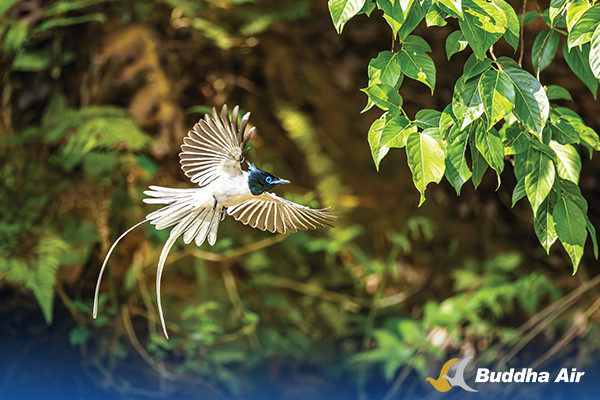
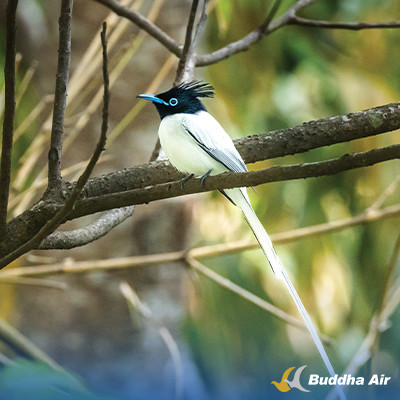
It is one of the most elegant birds found in Kathmandu and Nepal’s forests and wetlands. The male is known for its long flowing tail feathers, often pure white or rufous, trailing behind like ribbons in flight. It is a migratory bird that arrives in Nepal around April from southern India and Sri Lanka. It comes here to nest, lay eggs, raise its chicks, and returns after September with its young. It moves quickly through the canopy, catching insects in flight. Its beauty, speed, and calm presence make it a favourite among wildlife photographers. I have captured this photograph at Ichangu, Kathmandu.
2. The Red Panda
The red panda is one of Nepal’s rarest and most beautiful Himalayan wildlife species. Red pandas live in cool high-altitude habitats between 2,000 and 4,500 meters with dense bamboo forests, old trees, and thick canopy cover. Bamboo makes up most of their diet, and they spend much of their time resting and moving through the trees. Nepal is estimated to hold around 317–582 red pandas. I have captured this photograph at Cholangpati, Gosaikunda red panda zone.
3. Royal Bengal Tiger
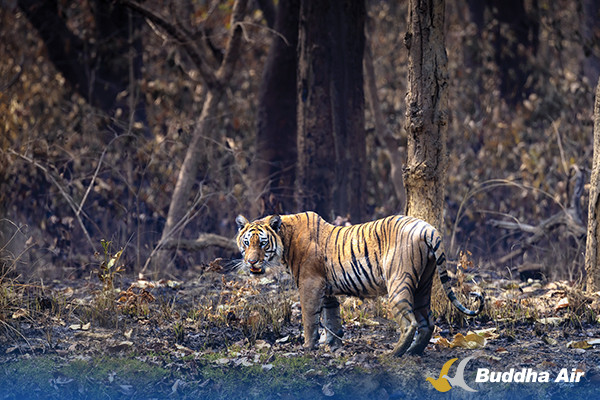
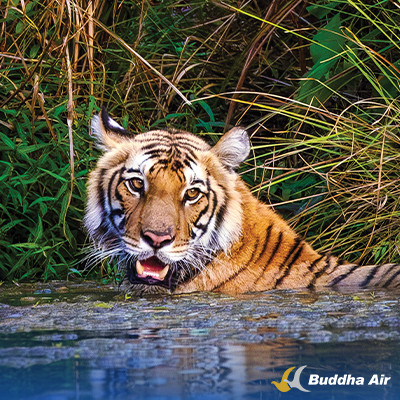
The Royal Bengal tiger is found mainly in lowland national parks. It moves silently through dense grasslands and riverine forests. Nepal’s tiger population is around 355 individuals, reflecting strong conservation success but also increasing human–wildlife interaction in the Terai landscape. I have captured this photograph at Bardiya National Park.
You may also like: Wildlife Tourism in Nepal - Discover Wild Wonders of Nature
4. Common Leopard
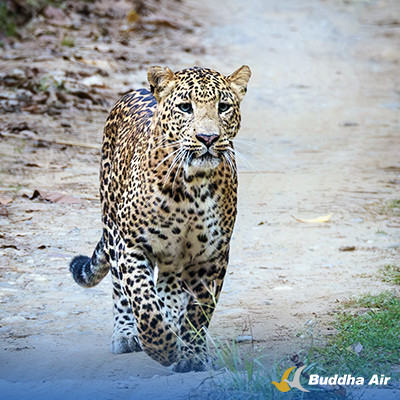
The common leopard moves silently through dense sal forests and open grasslands, staying mostly hidden in shadows and cover. It is also a highly skilled climber, often dragging its prey up into trees to protect it from other predators. Unlike tigers, it is highly adaptable and alert, making every sighting unpredictable. I have captured this photograph at Bardiya National Park.
5. Spiny Babbler
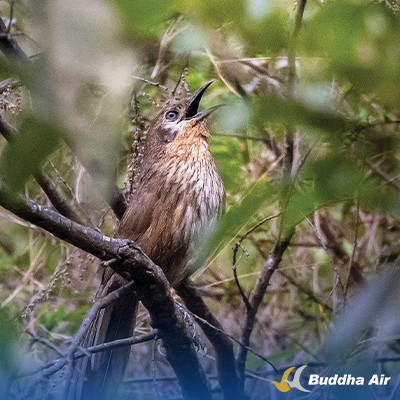
The Spiny Babbler (Nepal’s only endemic bird) is a small, shy, and ground-dwelling bird found mainly in scrublands and dry forests of central Nepal. It is rarely seen and often stays hidden in dense bushes, moving quietly through the undergrowth as it searches for insects. I took this photo at the back hill of Doleshwar Mahadev Temple in Bhaktapur.
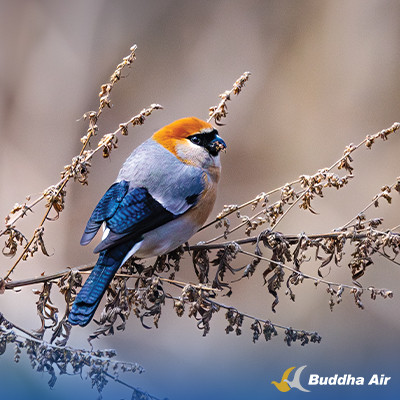
6. The Red-headed Bullfinch
It is a striking Himalayan bird found in high-altitude forests and shrublands of Nepal. The male is easily recognised by its bright red head, contrasting with its dark body feathers, while the female is more muted in colour. It is usually seen in small groups, feeding on seeds and berries among rhododendron and juniper habitats. I captured this photograph at Chandanbari, Gosaikunda.
7. The Red-headed Trogon
It is one of the most striking forest birds found in Nepal. It has a vivid red head, deep green body, and long tail, making it one of the most visually stunning birds in the region. Despite its beauty, it is extremely shy and usually stays hidden in dense, shaded forests, which makes sightings rare. It is typically seen alone or in pairs, sitting quietly on branches for long periods. I have captured this photograph at Godawari.
8. One-Horned Rhino
The one-horned rhinoceros is one of Nepal’s most iconic and endangered wildlife species, found mainly in the grasslands and wetlands of Chitwan and Bardiya National Parks. Known for its single black horn and armour-like skin, this gentle giant plays an important role in maintaining the ecosystem of Nepal’s lowland forests. I have captured this photograph at Chitwan.
9. Great Cormorant
The great cormorant is a large waterbird. Known for its dark glossy feathers, long neck, and sharp hooked bill, this skilled diver feeds mainly on fish by swimming underwater with remarkable speed. But I captured this photograph at Kamal Pokhari, Kathmandu.
10. Naumann’s Thrush
It is a winter migratory bird from northern Asia that visits Nepal during the cold season. It is recognized by its warm reddish-brown plumage, black-streaked chest, and calm, unobtrusive behaviour. I took this bird picture at Mulpani near the Manohara River.
About the Photographer
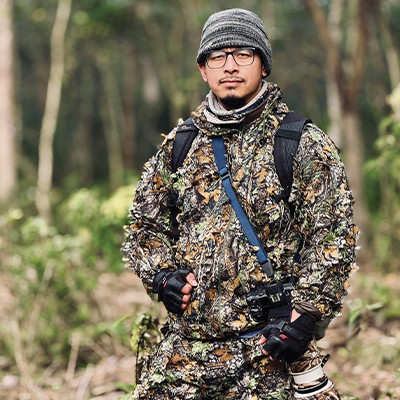 Ambish Kaji Shakya is a Mechanical Engineer working at Nepal Telecom. Alongside his professional career, he has been engaged in nature and wildlife photography for the past 15 years.
Born and raised in the core city area of Ombahal, Kathmandu, he began his journey as a freelance photographer, capturing landscapes, nature, festivals, jatras, and cultural events. Regular work-related travel to high-altitude regions gradually brought him closer to natural habitats, strengthening his interest in wildlife. Over the last three years, he has fully dedicated himself to wildlife photography.
For him, wildlife photography is a form of meditation. It helps develop patience and humility. It also nurtures a sense of wonder, revealing extraordinary life within ordinary landscapes.
A passion for wildlife drives his photography, and he serves as a visual storyteller for nature and conservation. He continues this journey with plans to travel across Nepal in search of its wild stories.”


