




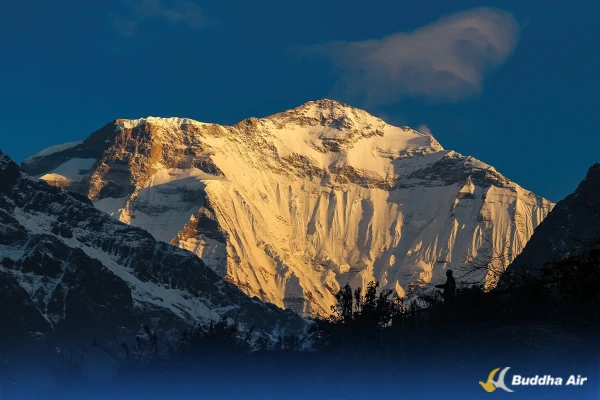
Dhaulagiri Base Camp (4,055 meters) offers a unique experience. Dhaulagiri Mountain rises steeply, with snow constantly falling from its slopes. Sitting at the base camp and gazing upward is an awe-inspiring moment. Within the base camp lies Swun Chhahara (Golden Waterfall). In winter, the waterfall freezes into a cascading ice formation. Near Swun Chhahara is the source of the Raghu Ganga River, which later merges with the Kali Gandaki at Galeshwor Dham.
Close to the river’s origin lies Nilibhara Lake, a mysterious lake perched high on a peak. Neither its inlet nor outlet is visible, which has led to the belief that it possesses divine power.
 Local legend tells of a man playing a damaha (a traditional kettledrum) who once sought gold from the god Dhaulagiri Moni. The god told him, "I will block the river. Strike it with an axe, and take as much gold as you can." The man struck with his axe, and a small piece of gold appeared. But he grew greedy and hit again. This time, the god released the river, which swept the man away. People say that even today, the sound of a drum can sometimes be heard near the waterfall.
Dhaulagiri Icefall Trek has been developed to promote tourism in the region. The route begins at Gayatri Temple in Ward No. 3 of Raghuganga Rural Municipality. It passes through Rakhu Bhagawati, Ruisedanda, Bhediodhar, and Sowangdhuri before reaching the base camp and connecting to Sungurthala. The trek takes about a week to complete.
For those with limited time, the base camp can be reached in two days from Beni Bazaar. To do this, trekkers must first travel by vehicle to Sungurthala and spend the night there. From there, they can trek to the base camp and return the same day. The base camp is lively in all seasons. During the monsoon, sheep graze across its vast pastures. In March and April, the area becomes crowded with people collecting the prized Himalayan herb Yarsagumba.
The highest point of the trek is Deurali Bhanjyang (5,263 meters). From here, the Himalayas are clearly visible. When the trail is snow-covered, it takes about two hours to cross the Bhanjyang; otherwise, it can be crossed in about an hour. Descending from the pass leads directly to Dhaulagiri Base Camp.
Well done, Thamamaya!
The visionary behind the Dhaulagiri Icefall Trek is Thamamaya Thapa. Born in Chimkhola of Raghuganga Rural Municipality–7, she has served as a member of the Constituent Assembly and as a minister. Under her leadership, research for the Dhaulagiri Icefall Trek began in fiscal year 2008- 2009. Since fiscal year 2011-2012, the Department of Tourism has allocated budgets annually for the construction of the trekking route. The only remaining section to be completed is the cliff route near the base camp. In the past, villagers of Chimkhola had to travel down to Beni Bazaar via Dharamdhunga and Ruise Danda. Thapa, however, had long dreamt of developing tourism in her region. Having grown into a bold leader, she says, “Our dream is coming true. We have branded a short and easy trekking route to reach Dhaulagiri Base Camp for tourists.” She has consistently led this tourism campaign. Before entering politics, she taught in the village school for more than a decade. Many good wishes to her in fulfilling her vision!
Several famous pilgrimage sites can be visited during the trek. In Beni Municipality, heritage sites include Galeshwor Dham, Jagannath Temple, Maharani Than, Beni Chaitya, Navadurga Temple, Bhadrivam Shivalaya, Pulatsya Pulashram, and Lakshminarayan Temple. Likewise, Bhagwati Temple is located in Rakhum.
The road now extends as far as Ruise, so many trekkers begin their journey from there. At the top of Ruise (2,208 meters) lies Bhediodhar (2,500 meters), literally meaning “sheep cave.” From this vantage point, one can see Churen, Gurja, Dhaulagiri, Annapurna, Nilgiri, and Machhapuchhre mountains. Sunrise and sunset views are especially spectacular. Villagers traditionally shelter their sheep in caves here during the winter, giving the site its name.
This biodiversity-rich trekking route also features fascinating spots, including Dharamdhunga, Pani Dakne Danda, Khola Kharka, Sowang Dhuri, Deurali, Kachuwa Odhar, Sasaldhara, and Sungurthala. Trekkers will also encounter waterfalls, lakes (such as Kalibhara, Setibhara, and Pahenlibhara), Nagdhunga, and hives of Himalayan cliff bees.
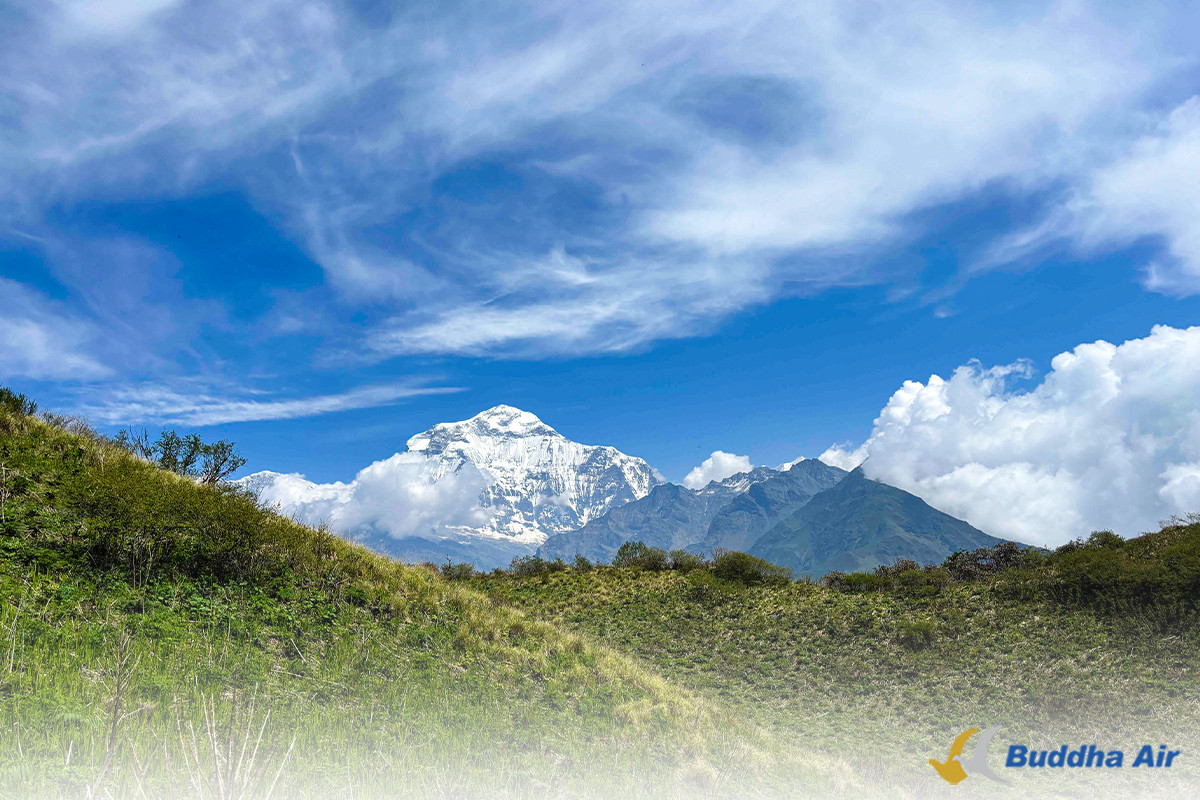 Sowang Dhuri
Sowang Dhuri (3,840 meters) is a hill station along the Dhaulagiri Icefall trekking route. From here, trekkers can enjoy panoramic views of the mountains at sunrise and sunset. The Dhaulagiri, Annapurna, Nilgiri, Manaslu, Machhapuchhre, Tukuche, and Manapathi ranges can all be seen clearly. Sowang Dhuri also offers views of Punhill, Mohredanda, Mulde, Khopara, and Todke, as well as villages in Myagdi and Parbat districts. The area is also rich in biodiversity. Various medicinal herbs grow here, and wildlife such as Nepal's national bird, the danfe (Himalayan monal), as well as musk deer and red panda can be found. In the past, villagers from Chimkhola used to keep their cattle in Sowang Dhuri during the rainy season. In winter, the cattle were moved down to fields near the village. Sowang Dhuri lies on the border of Dana and Chimkhola. About 600 meters away is a place called Ngalching Katakat Nazar Haa. According to local legend, hunters once fought here during a hunting trip. Both struck each other with khukuris and died, locking eyes in their final moments. It is believed the name of the place comes from this tragic story.
Unlike many trekking routes in Nepal that are being disrupted by expanding road networks, the Dhaulagiri Icefall Trek remains pristine. Since there are no hotels, lodges, or homestays along the trail, trekkers must rely on camping treks.
How To Reach Dhaulagiri Icefall Trek
To reach the starting point of the Dhaulagiri Icefall Trek, travellers can journey from Kathmandu to Beni, a distance of approximately 288 kilometers, which takes around nine hours by bus. Alternatively, they can take a short 25-minute flight from Kathmandu to Pokhara, followed by a 2.5-hour drive covering 88 kilometers from Pokhara to Beni. From Beni, it is another 17 kilometers to Galeshwor and Ruise, which takes about two hours by jeep. The trek begins at Ruise. After completing the sevenday circuit, trekkers can return from Sungurthala to Beni Bazaar by jeep, concluding the journey.
Chimkhola
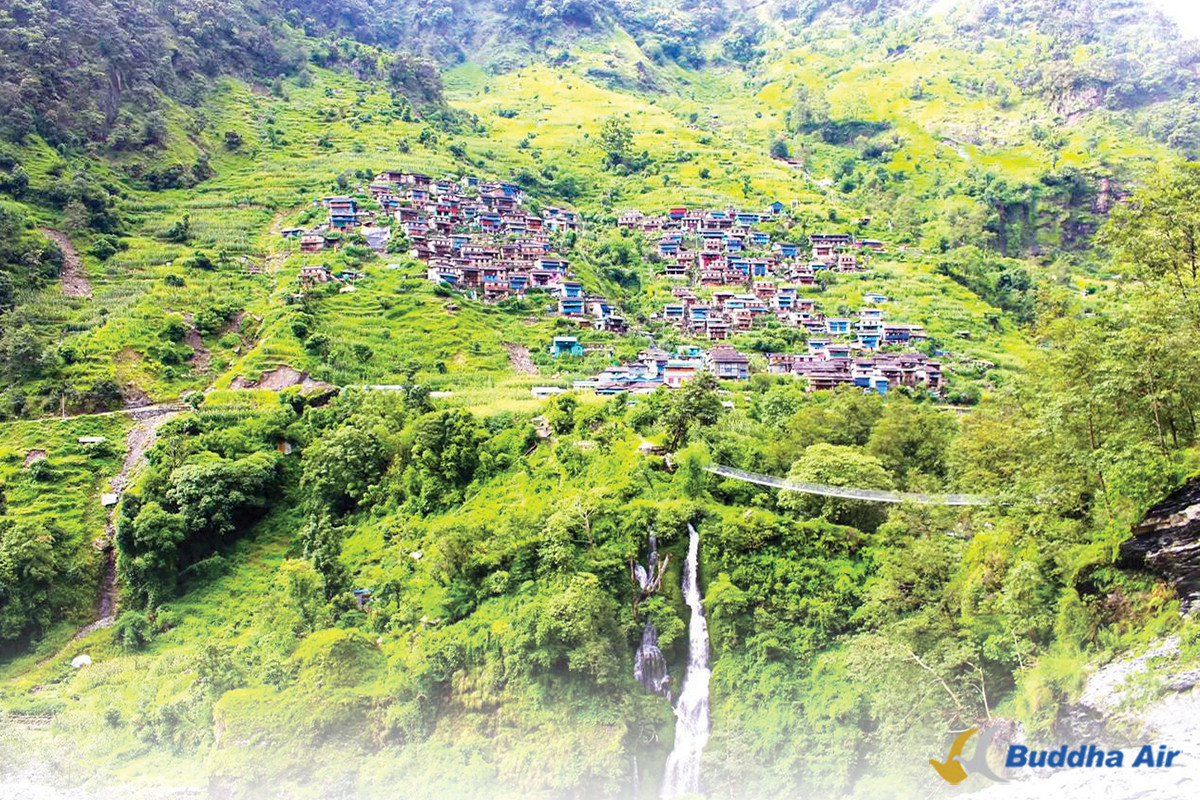
Chimkhola is a picturesque hill village with about 300 households, mainly inhabited by the Magar and Dalit communities. The houses are clustered closely together on the mountain slope, so that when viewed from below, they appear stacked one on top of another. Built of stone and mud, these houses are simple yet strikingly beautiful.
The village has two religious sites, Mandali Temple and Bhumethan. A large fair is held at Mandali twice a year, in December/ January and March/April, while worship rituals are performed at the Bhumethan. Chimkhola is also wellknown for the doko (basket) made from reed bamboo.
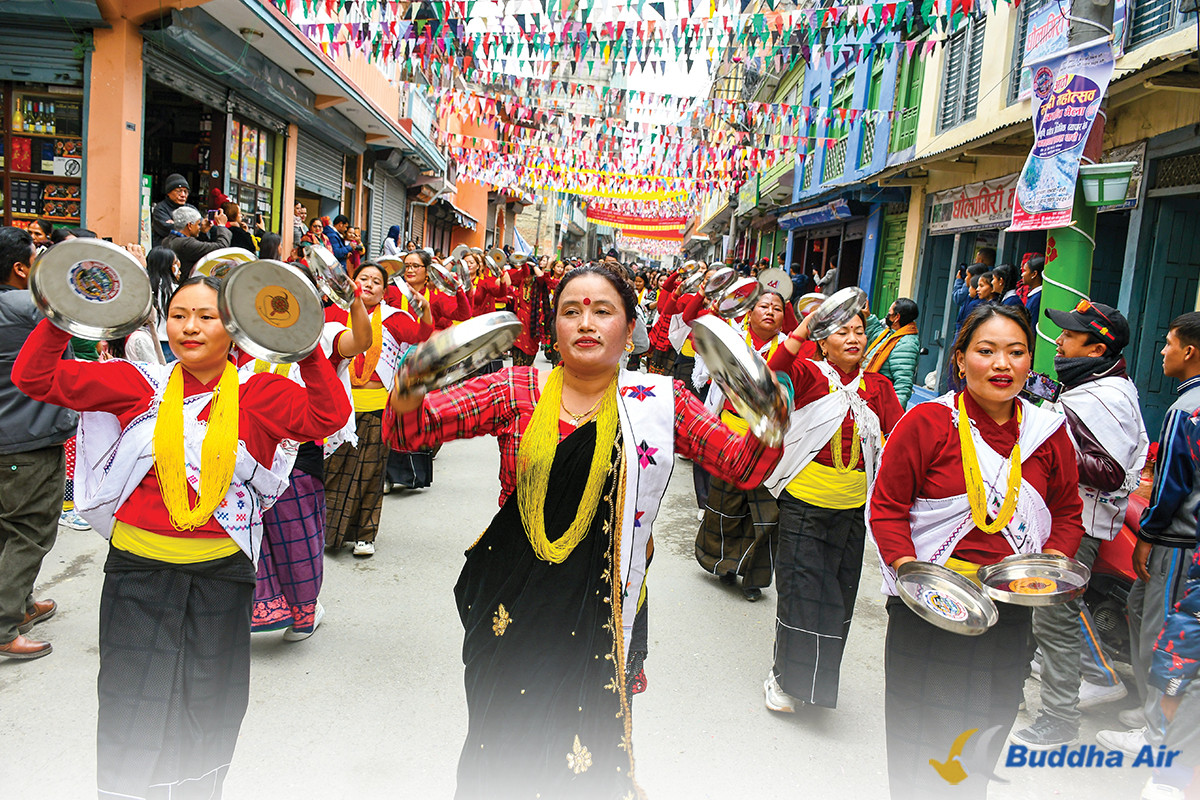
Chimkhola is the birthplace of the Thali dance, performed by holding a plate in the hand and spinning it rhythmically in time with the song. Cultural activist Hiramaya Pun pioneered the dance. Another well-known dance of Chimkhola is the Purkhyauli (also known as Sorathi) dance, which reflects the lifestyle, customs, and culture of the village. In this folk performance, accompanied by madal drums and cymbals, men often dance in the guise of women. The songs of the Purkhyauli dance recount unwritten histories of Magar culture, narrating tales of kings and queens, Karbakeli Baba, ancestors, village life, forests, rivers, and both domestic and wild animals.
Purkhyauli dances are performed during weddings, bratabandha ceremonies, feasts, and the bhume puja.


