




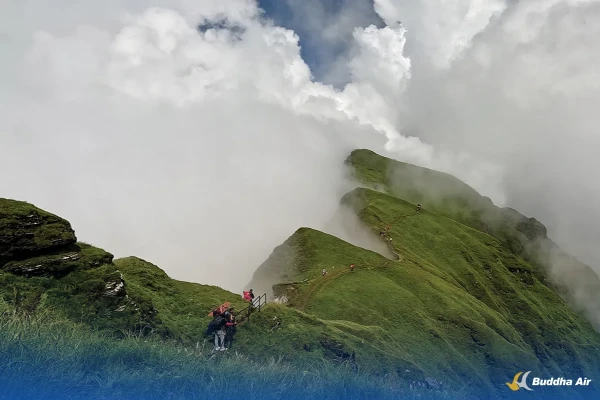
Badimalika is a famous Shakti Peeth in the Far West region. At an altitude of 4,220 meters, in Ward No. 9 of Triveni Municipality, Bajura district, stands a two-story pagoda-style temple. Inside the temple are statues of the goddesses Mahakali, Mahalaxmi, and Durga.
The temple, situated on a hilltop, has been recently reconstructed. Along with the temple, a havan kunda (sacrificial fire pit) and a helipad have also been built. The temple itself is made of wood, stone, and clay, while the roof is brass. The Nepali Army rebuilt the old dilapidated structure.
It is believed that visiting Badimalika fulfils wishes, cures diseases, brings promotions, and grants wealth. Pilgrims first bathe at Badimalika's base camp, Triveni Dham. Bathing here is believed to wash away sins, and immersing cremation ashes in this site is said to help ancestors attain a heavenly abode. For this reason, it is customary to perform Shraddha here for the salvation of one’s ancestors.
Triveni Dham lies at the confluence of the borders of Kalikot, Achham, and Bajura districts. The word Triveni literally means the meeting point of three rivers. Here, the Kshir, Benurudra, and Mandakini rivers converge. Mandakini is not visible because it flows underground.
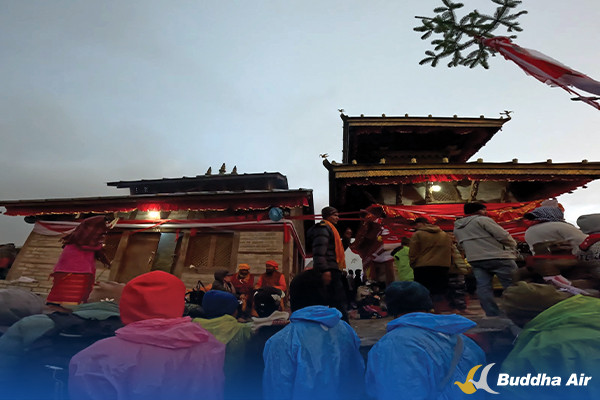
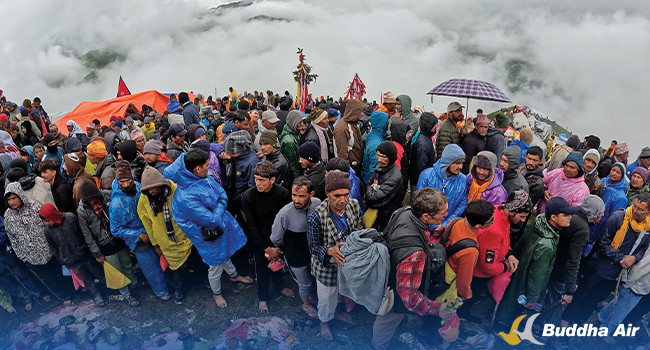
Every year, a grand fair is held at Badimalika on Janai Purnima, attracting thousands of visitors. After bathing at Triveni, pilgrims make the ascent to Badimalika.
On the eighth day of the Shukla Paksha (bright moon phase) of Jestha— the second month of the Bikram Sambat calendar—it is a tradition for the Nepali Army and the Head of State to offer worship at Badimalika. Similarly, on Shukla Chaturdashi, the day before Janai Purnima, worshippers from Doti and Jumla, on behalf of the Gorkhali and Chandannath platoons, respectively, perform puja at the temple.
Badimalika is considered the eldest of the seven sister goddesses of the Far West. The others are Ugratara, Shaileshwari, Melauli Devi, Nigalasaini, Dilasaini, and Tripurasundari. The word Badi means “elder,” and since Malika is the eldest among the sisters, she is called Badimalika.
Badimalika is also connected to the Hindu mythological story of Sri Swasthani Vratkatha. According to the story, after the death of his consort Sati Devi, Lord Shiva wandered the earth carrying her body. When he reached Mallagiri Mountain, Sati Devi’s left shoulder fell there. The hill was initially called Malika, and later came to be known as Badimalika.
Badimalika is a Hindu shrine located at the highest altitude in the entire Indian subcontinent.
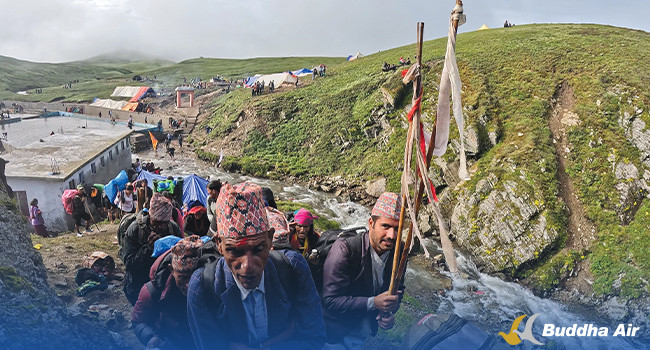
After visiting Badimalika, it is also mandatory to visit Natyashwari. It takes approximately 10 hours of trekking to reach Badimalika from there. Within the Natyashwari premises are temples dedicated to Kalikadevi and Dhalpuradevi, where sacrifices are offered to the goddess Kalika.
Natyashwari is also known as Nachanathali. According to legend, gods and goddesses danced here in celebration after slaying a demon at Triveni Dham.
Those who are unable to climb Badimalika’s hill offer their worship at a place called Poima, where a Badimalika storehouse stands, and daily worship is performed.
The Badimalika area itself radiates spiritual energy. It is regarded as an incomparable destination for yogis and meditators. For ordinary people, it is considered the "heaven" described in religious texts.
Badimalika is unique not only in its religious and mythological significance but also in its natural beauty. During the monsoon, the vast pastures turn lush green. At the same time, white, red, yellow, blue, and purple flowers bloom in abundance, painting the fields with vibrant colours. Sheep, horses, cows, and other livestock grazing in these meadows amid colourful blossoms create a scene that resembles a divine garden.
When the weather is clear, a long stretch of the Api and Shaipal mountain ranges can be seen from the hill. The panoramic views of both sunrise and sunset are also breathtaking.
You may also like: Best Trekking Routes in Nepal to Explore Himalayas
Badimalika is rich in biodiversity. A variety of medicinal herbs are found in this area. Along with birds like the Danfe (Himalayan Monal) and Kalij Pheasant, animals such as the wild boar, Himalayan goral, Himalayan tahr, and barking deer also inhabit the area.
Badimalika trek is an unforgettable experience. Along the journey, one can observe temples, birds, wildlife, rivers, mountains, and waterfalls. At times, nature seems to play hide-and-seek with the traveller, making one feel as if they have arrived in paradise on earth.
The Badimalika region holds immense tourism potential. However, it has yet to benefit fully from this sector. Currently, the area primarily serves as pastureland for the surrounding villages, where locals graze sheep, goats, horses, and other livestock.
Best Time to Visit Badimalika
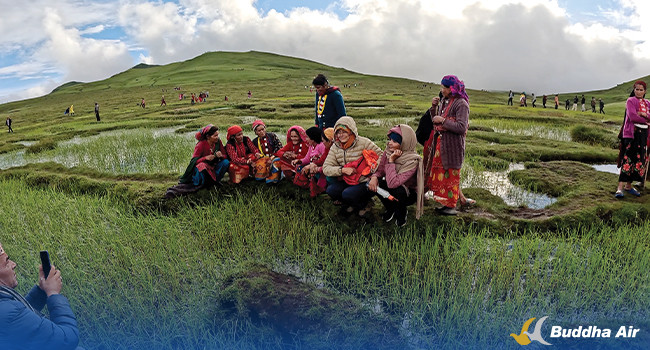
The best time to visit Badimalika is from April to September. Unfortunately, there are no proper food and accommodation facilities along the trekking route. With no hotels, homestays, or lodges, visitors have no choice but to opt for camping treks.
Temporary hotels under tarpaulin shelters are set up during the Janai Purnima fair, offering basic food and accommodation at fixed prices. Some pilgrims bring their own tents, clothing, and supplies for the festival.
Unless hotels and lodges are built at different points along the trekking route, tourism in the area will not flourish. Therefore, the local government needs to invest in constructing and renting such facilities. Infrastructure such as roads, electricity, toilets, and water taps must also be developed.
Currently, Nepali and Indian pilgrims are the primary visitors to the Janai Purnima fair. With improved infrastructure, proper branding, and aggressive marketing as a monsoon trekking route, Badimalika could also attract international tourists.
How to Reach (Best Route)
Badimalika can be reached from Achham, Bajura, and Kalikot districts. Travellers from Kathmandu should allocate around 10 days for the trip. The distance from Kathmandu to Dhangadhi is approximately 680 km, which can be covered in about 16 hours by bus or 1 hour and 10 minutes by flight. From Dhangadhi, it is a 12-hour bus journey (327 km) via Dipayal and Sanfebagar to reach Martadi. From Martadi, the Badimalika trek is a three-day journey. The return journey from Badimalika to Dhangadhi also takes three days.


