




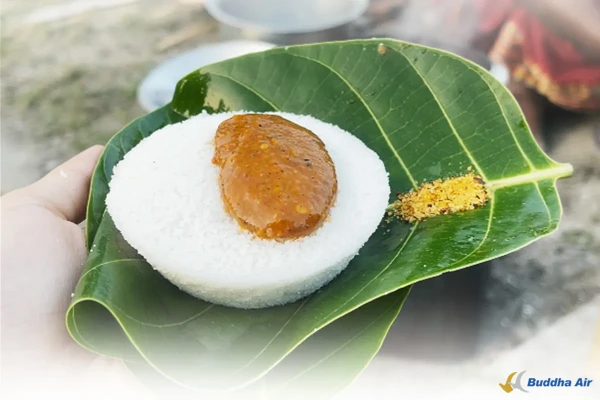
Bhakka is a popular and delicious dish that originated in eastern Nepal. It is the traditional dish of the indigenous Rajbanjsi and Tajpuria communities, in the Jhapa district. Bhakka is enjoyed as breakfast in every home within the community. Nowadays, this dish has gained popularity as a street food in the Terai region, specifically in Jhapa, Morang, and Sunsari districts during winter.
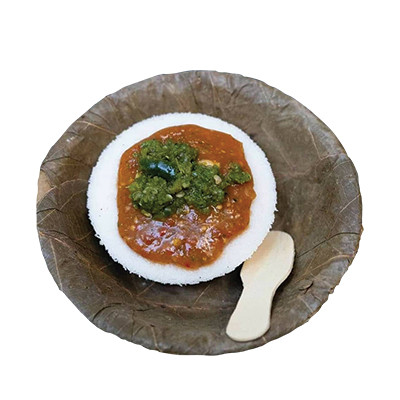 Bhakka is made from rice flour and cooked with steam. The dish is shaped like a small white cake, made from rice flour, and cooked in an earthen pot called a handi. It can be served with tomato chutney for extra taste.
Bhakka is considered to be a healthy dish for people of all ages, from children to the elderly. A dish cherished by the Rajbansi ethnic community since ancient times has now become a common culinary delight. It was a customary treat for daughters returning to their paternal home and is cherished for its body-warming properties during the cold winter. The dish’s popularity as a breakfast option for both children and adults can be attributed to its filling and unique taste.
Rajbansi women can be seen carrying freshly made Bhakka in Dhakiya (traditional baskets) and selling them in nearby markets. These days, the Bhakka dish has spread across the hills from Jhapa and has started to attract customers in a few restaurants including Bhakka House old Baneshor in Kathmandu. 'National Bhakka Day' is celebrated on the 29th of Poush every year.
Ingredients Needed For Bhakka
- Rice Flour
- Water
- Tomato or coriander for chutney
How is Bhakka Prepared?
The process of preparing Bhakka begins by lightly moistening rice flour obtained from soaked rice. This moistened flour is then kneaded with the palms until it forms a texture that is both moist and sandy.
The mixture is carefully sifted, resulting in small round grains that resemble sand in appearance. These grains are gently compacted into small bowls and then steamed. Traditional preparation involves using a clay pot with a narrow opening, covered by a muslin cloth. The rice cake is placed on the cloth and steamed with the lid on to achieve the desired outcome in less than a minute


